


Limbă
ING
Introduceți cuvinte cheie...


NOU
 Acasă / Ştiri / știri din industrie / A Beginner's Guide to Hydraulic Hose & Fittings: Everything You Need to Know
A Beginner's Guide to Hydraulic Hose & Fittings: Everything You Need to Know
 2026.06.22
 știri din industrie
If you only remember one thing from this guide, remember this: hydraulic hose & fittings are not interchangeable parts you can mix and match randomly — they must be matched by pressure rating, thread standard, and dash size, or the system will leak, fail, or become dangerous. A hydraulic hose without the correct fitting is just rubber tubing; the fitting is what actually seals the connection under pressures that often exceed 3,000 to 6,000 PSI. This guide breaks down every hyd fitting type, hose connection type, and sizing standard a beginner needs to confidently select, install, and maintain a hydraulic hose assembly.
What Is a Hydraulic Hose?
A hydraulic hose is a flexible, reinforced tube designed to carry pressurized hydraulic fluid between components such as pumps, valves, cylinders, and motors. Unlike rigid hydraulic pipe fittings, hoses allow movement and vibration absorption, which is why they are used on excavators, forklifts, presses, and agricultural machinery where parts move constantly.
Every hydraulic hose has three core layers:
- Inner tube — usually synthetic rubber or thermoplastic, compatible with the hydraulic fluid being carried.
- Reinforcement layer — one or more braided or spiral-wound layers of steel wire that determine the pressure rating.
- Outer cover — protects against abrasion, weather, oil, and ozone exposure.
Understanding this structure matters because the reinforcement layer count directly determines which fitting type and crimp specification can be safely used on that hose.
Hydraulic Hose & Fittings: Why They Must Be Treated as One System
A common beginner mistake is shopping for hydraulic hose and hydraulic hose fittings separately, as if they were independent products. In reality, the hose, the fitting, and the crimp die form a single sealed system. A mismatched fitting can reduce a hose's working pressure by 50% or more, even if the hose itself is rated correctly.
When sourcing hydraulic hose & fittings, three specifications must always align:
- Hose ID (inside diameter) and dash size
- Fitting thread standard (NPT, JIC, BSP, Metric, ORFS, etc.)
- Pressure rating compatibility across hose, fitting, and ferrule/crimp
Getting any one of these wrong is the single biggest cause of premature hydraulic hose connection failure in the field.
Types of Hydraulic Hose You'll Encounter
Before discussing fittings, it helps to understand the main types of hydraulic hose, since hose construction influences which fitting type is recommended.
| Hose Type | Reinforcement | Typical Max Pressure | Common Use |
|---|---|---|---|
| SAE 100R1 | 1 steel braid | 2,250–3,000 PSI | General industrial machinery |
| SAE 100R2 | 2 steel braids | 3,000–5,000 PSI | Excavators, construction equipment |
| SAE 100R12 | 4 spiral wires | 2,750–4,000 PSI | High-pressure mobile hydraulics |
| SAE 100R15 | 6 spiral wires | 5,000–6,000 PSI | Heavy-duty presses, mining |
| Thermoplastic Hose | Aramid/polyester braid | 3,000–4,500 PSI | Lightweight, abrasion-prone routing |
Knowing the hose type matters because, for example, a 4-spiral-wire R12 hose generally requires a heavier-duty crimp fitting and a higher-tonnage crimping machine than a single-braid R1 hose, even if both have similar inside diameters.
Hyd Fitting Types: The Core Categories
When people search for "hyd fitting types" or "hydraulic hose fitting types," they're usually trying to figure out which of two broad families they need: permanent (crimp) fittings or reusable (field-attachable) fittings.
Permanent Crimp Fittings
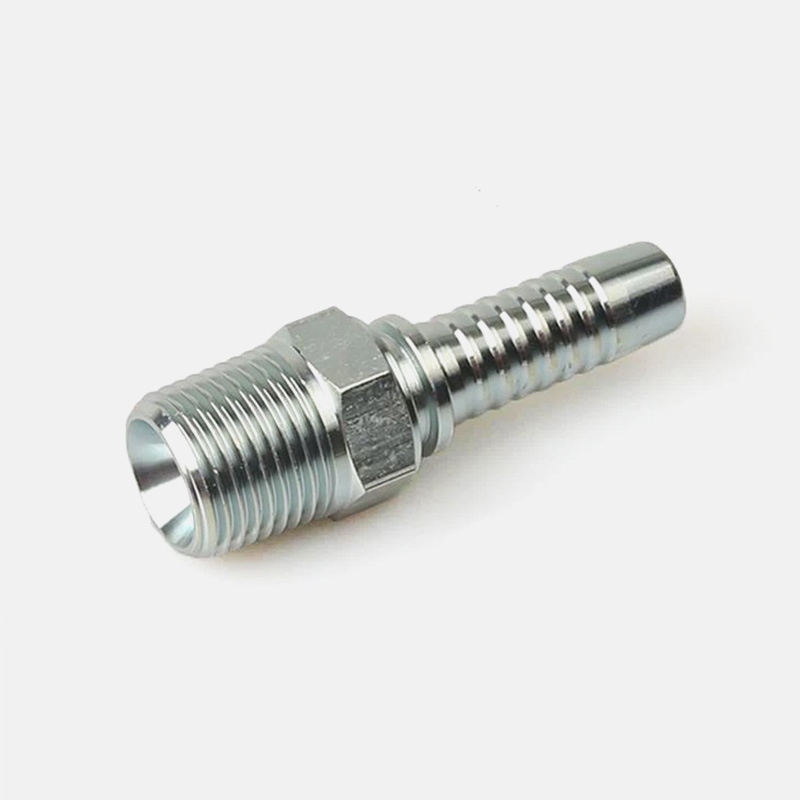
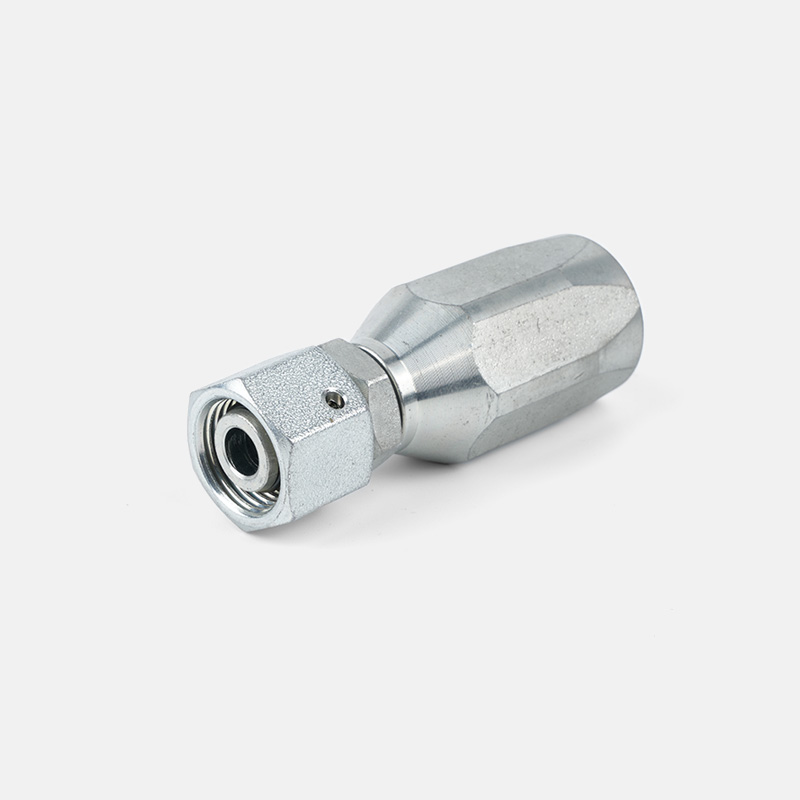
These are swaged onto the hose using a crimping machine and cannot be removed without cutting the hose. They are the industry standard for OEM assembly lines and hose shops because they offer the most consistent, leak-free seal and lower long-term cost per assembly.
Reusable (Field-Attachable) Fittings
These screw onto the hose without a crimping machine, making them ideal for remote repairs, agriculture, and emergency field service. They are slightly bulkier and typically cost 20–40% more per assembly than crimp equivalents, but they let a technician fix a burst hose in minutes without specialized tooling.
Types of Hose Fittings by Thread & Seal Standard
This is the most important section for anyone trying to identify the correct hydraulic hose fitting types for their machine. Below is a breakdown of the most common types of hydraulic connectors used worldwide.
| Fitting Type | Seal Method | Region/Origin | Identifying Feature |
|---|---|---|---|
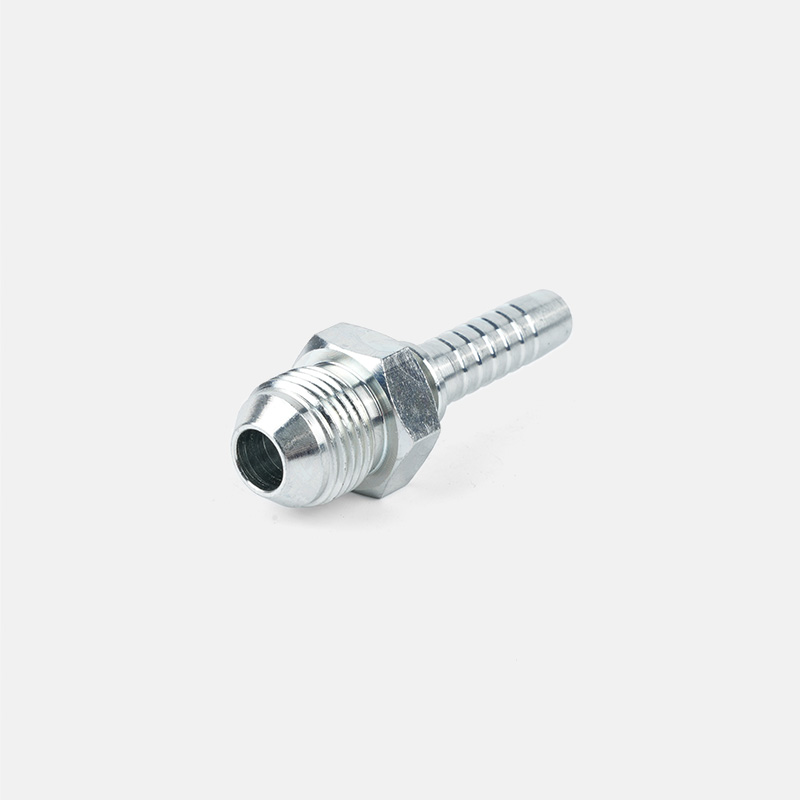
| JIC (37°) | 37° flare metal-to-metal | USA | Straight thread, 37° flare seat |
| ORFS (O-Ring Face Seal) | O-ring on flat face | USA | Flat face with visible O-ring groove |
| NPT/NPTF | Tapered thread | USA | Tapered, self-sealing threads |
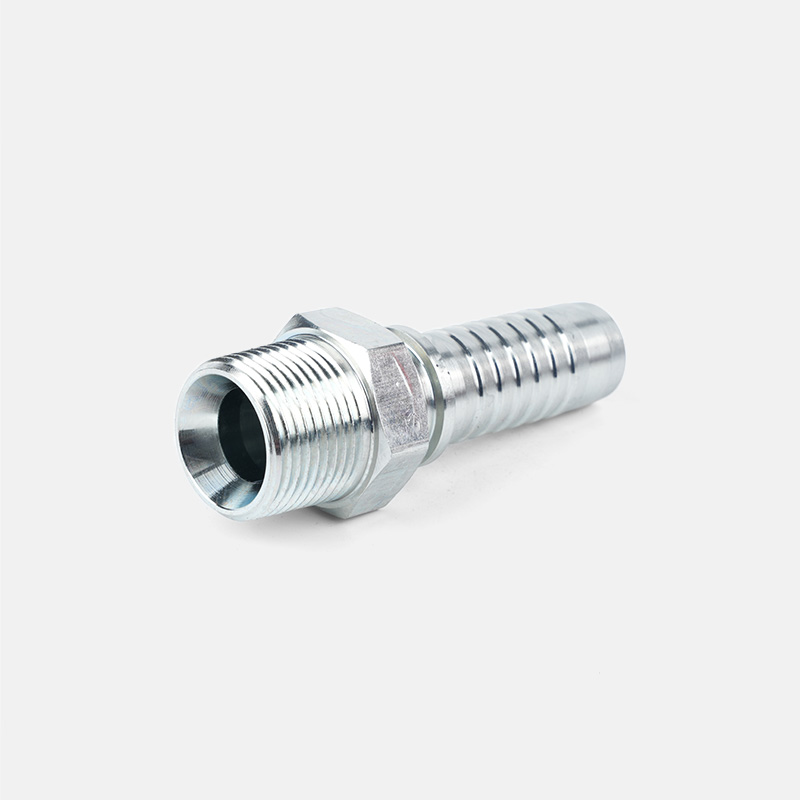
| BSP (BSPP/BSPT) | Parallel or tapered + washer | UK/Europe | 55° seat, often with bonded seal washer |
| Metric (DIN) | 24° cone or O-ring | Germany/Europe/Asia | Metric thread pitch, 24° cone seat |
| Flange (Code 61/62) | O-ring with bolted flange | Global (SAE) | Square/round bolt pattern flange head |
JIC fittings dominate North American mobile equipment, while BSP and Metric DIN fittings are far more common on European-manufactured machines. Mixing them without an adapter is one of the most frequent causes of thread damage and slow weeping leaks reported in hydraulic shops.
Hydraulic Hose Ends Types: Understanding the Shape
Beyond thread standard, hydraulic hose ends types also vary by geometry — this determines how the hose routes around obstacles and connects to ports.
- Straight fittings — the most basic, used when the hose runs directly in line with the port.
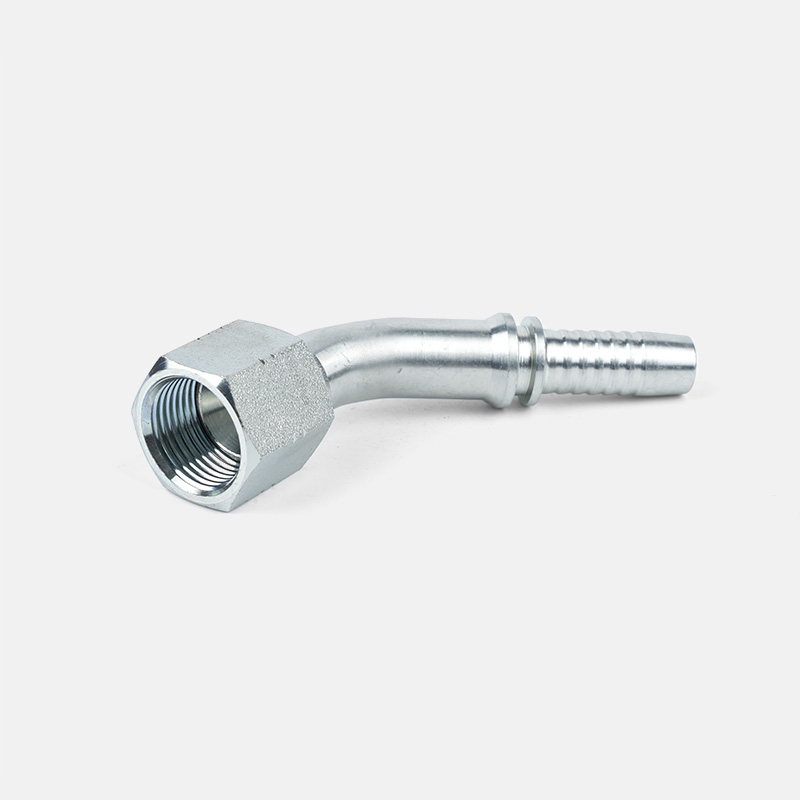
- 45° elbow fittings — used for moderate direction changes with minimal hose stress.
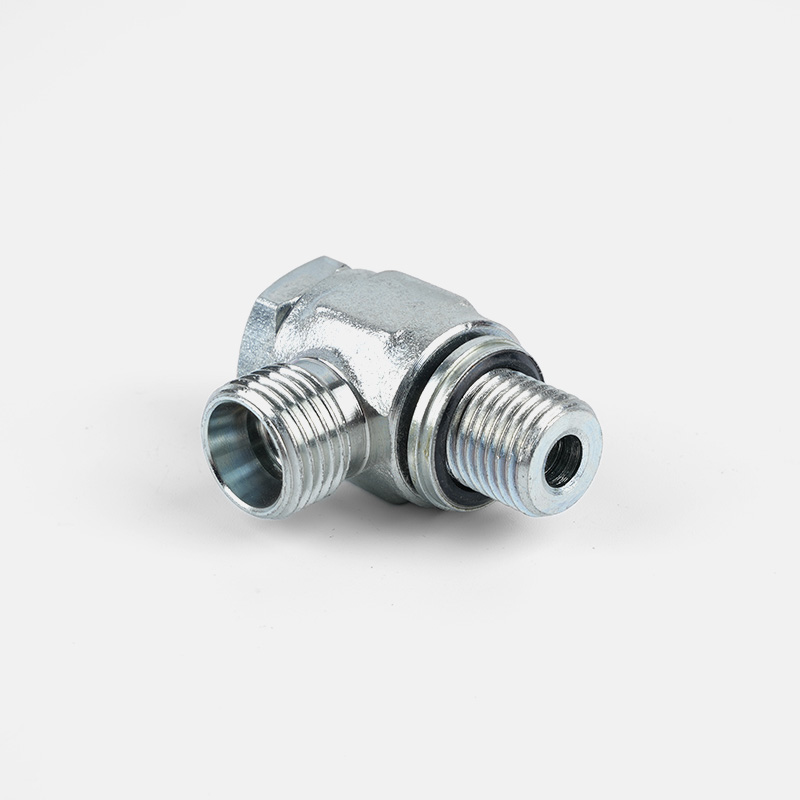
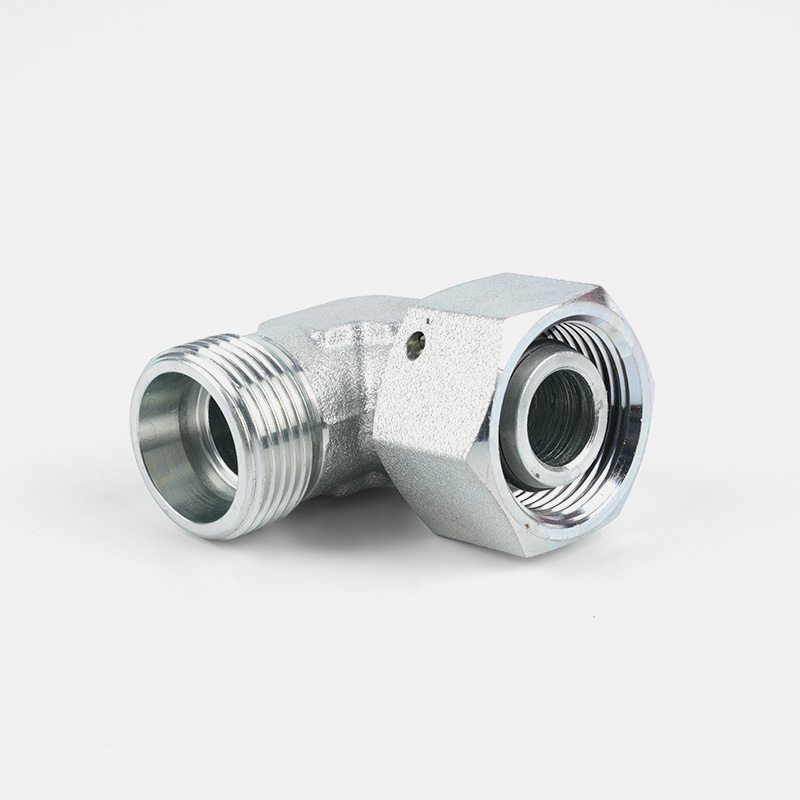
- 90° elbow fittings — used for tight, perpendicular routing where space is limited.
- Swivel fittings — allow rotation after installation, reducing hose twist fatigue.
- Banjo fittings — allow 360° positioning around a single bolt, common on engine and pump connections.
Choosing the correct hose end type isn't just cosmetic — improper angle selection is responsible for a large share of early hose fatigue cracking, since a straight fitting forced into a tight bend creates a stress point at the crimp collar.
Hydraulic Hose Connections: Male vs Female and Gender Adapters
Every hydraulic hose connection also has a "gender" — male fittings have external threads, female fittings have internal threads. Adapters convert between genders, thread standards, or sizes when connecting mismatched components. Common hose connection types include:
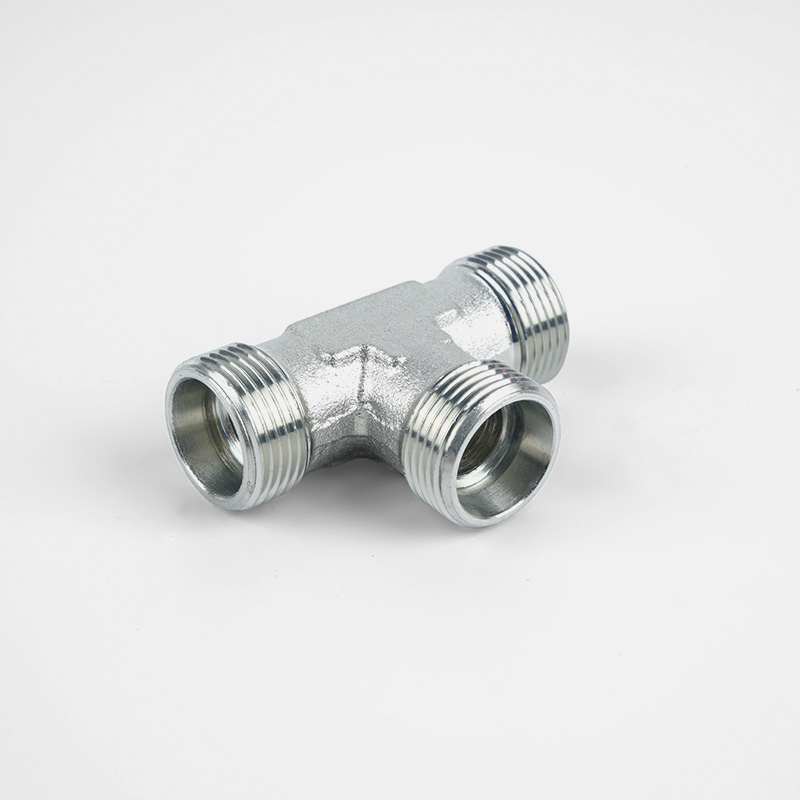
- Male-to-Male adapters (connecting two female ports)
- Female-to-Female adapters (connecting two male fittings)
- Male-to-Female reducers/expanders (changing size)
- Cross-thread adapters (e.g., JIC-to-BSP, NPT-to-Metric)
Keeping a small kit of these adapters on hand is one of the most practical things a beginner can do, since it solves roughly 80% of mismatched-connection problems without needing to replace an entire hose assembly.
Hydraulic Fitting Sizes and the Dash Size System
Hydraulic fitting sizes are almost universally expressed using "dash numbers," where each dash size equals 1/16 of an inch in nominal hose inside diameter. So a "-8" fitting corresponds to 8/16", or 1/2 inch — this is why "1/2 hydraulic hose fittings" are commonly labeled as dash 8 (-08) in catalogs and on fitting markings.
| Dash Size | Inch (ID) | Metric (mm) | Common Use |
|---|---|---|---|
| -04 | 1/4" | 6.4 mm | Pilot lines, gauges |
| -06 | 3/8" | 9.5 mm | Light hydraulic circuits |
| -08 | 1/2" | 12.7 mm | Most common general-purpose size |
| -10 | 5/8" | 15.9 mm | Medium-flow hydraulic lines |
| -12 | 3/4" | 19.1 mm | High-flow return/suction lines |
| -16 | 1" | 25.4 mm | Large pumps, suction lines |
The -08 (1/2") size is the single most commonly stocked hydraulic fitting size in industrial supply houses, because it covers the widest range of mid-pressure mobile and stationary equipment.
Hydraulic Pipe Fittings vs Hydraulic Hose Fittings
Beginners often confuse hydraulic pipe fittings with hose fittings, but they serve different purposes:
- Hydraulic pipe fittings connect rigid steel or stainless pipe sections in fixed installations, typically using NPT taper threads for a metal-to-metal seal.
- Hydraulic hose fittings connect flexible hose to ports, pumps, or pipe fittings, usually via crimp or reusable attachment, and commonly use JIC, ORFS, or BSP seals rather than tapered pipe threads.
In practice, many systems use both — rigid pipe for long fixed runs and flexible hose for the final connection to a moving component — joined together using a pipe-to-hose adapter fitting.
How to Choose the Right Hydraulic Hose & Fittings
Follow this practical sequence when selecting a hydraulic hose fitting type for a new or replacement assembly:
- Identify the existing fitting type by measuring thread angle, checking for an O-ring groove, and measuring thread diameter and pitch.
- Match the hose dash size to the required flow rate — undersized hose increases fluid velocity and heat, which can shorten hose life significantly.
- Confirm the working pressure of the system exceeds your normal operating pressure by a safety margin, typically a 4:1 design factor for hydraulic hose.
- Choose crimp fittings for permanent installations and reusable fittings for remote or emergency repairs.
- Verify fluid compatibility of the inner tube material (nitrile, EPDM, etc.) with the hydraulic oil type used.
Common Hydraulic Hose & Fittings Mistakes to Avoid
- Mixing JIC and BSP fittings without an adapter, which damages threads even though they appear similar.
- Over-tightening O-ring face seal (ORFS) fittings, which can extrude or cut the O-ring.
- Using PTFE tape on NPTF fittings designed for dry-seal threads, which can contaminate the hydraulic system.
- Ignoring bend radius limits, which stresses the fitting-to-hose crimp joint and causes early failure.
- Reusing a crimp ferrule on a new hose — ferrules are single-use and should never be recrimped.
Frequently Asked Questions
What is a hydraulic hose used for?
A hydraulic hose transfers pressurized fluid between moving machine components, transmitting power to cylinders and motors while absorbing vibration and movement that rigid pipe cannot accommodate.
How do I know what size hydraulic fitting I need?
Measure the existing hose inside diameter or fitting thread diameter, then cross-reference it against a standard hydraulic hose fittings chart using dash sizes, which is the industry-standard sizing system.
Can I mix different hydraulic connector types?
Only with the correct adapter fitting. Direct mixing of different types of hydraulic connectors, such as JIC and Metric, will damage threads and cause leaks.
Final Takeaway
Hydraulic hose & fittings work as a matched system, not separate parts. Identify the thread standard, confirm the dash size, and match the pressure rating before ordering or replacing any hydraulic hose connection. Once you can recognize the major hyd fitting types — JIC, ORFS, NPT, BSP, Metric, and Flange — and understand the dash sizing chart, selecting the correct hydraulic hose fitting type becomes a fast, reliable process rather than a guessing game.


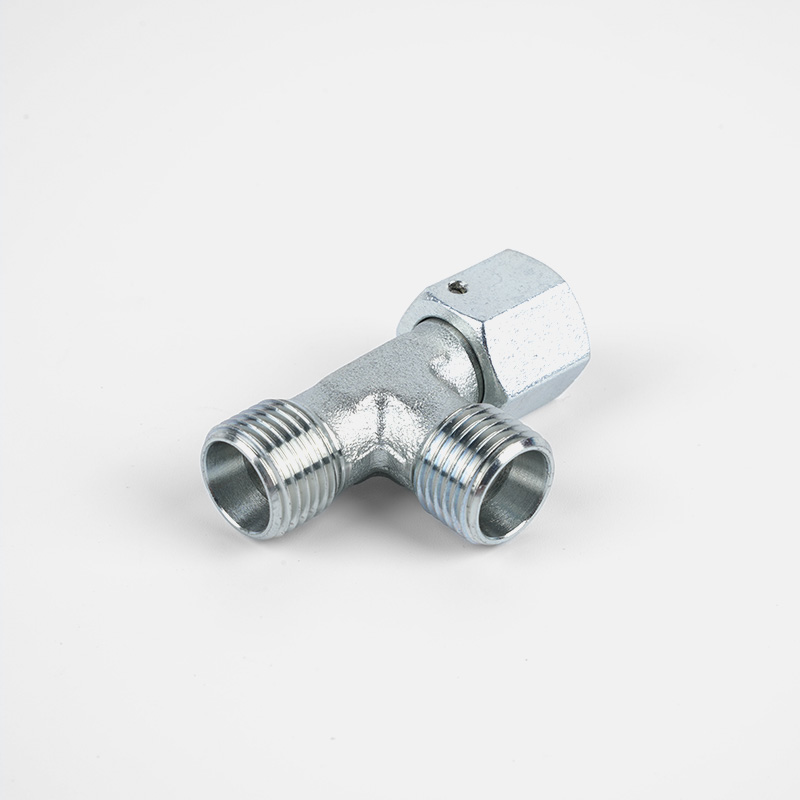

Accesorii hidraulice personalizate
De la concept la producție, putem crea produsele dorite
Produse
Informații de contact
-

Tel: +86-159-6851-8588
-

E-mail: [email protected]
-

Add:Satul stației Zhu Jia, orașul Diankou, orașul Zhuji, provincia Zhejiang, China
Copyright © Zhejiang Tianxiang Machine Fittings Co.,Ltd.
